
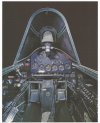
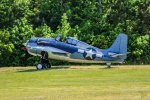
The old saying is that you fight the war with what you have, not with what you wish you had or have under development. A prime case came at the beginning of World War II, when Navy (VF) and Marine Corps (VMF) fighter squadrons were equipped with Grumman F4F-3 Wildcats. The F4F-3 was armed with four .50 cal machine guns and had wings that did not fold.
The XF4F-1 had been designed as a biplane and never flew. The Navy placed orders for Brewster F2As instead. Grumman did not give up, and the design was recast as a monoplane XF4F-2 which first flew in 1937. This was felt to have promise and was modified into an XF4F-3 in 1939. Grumman's persistence finally paid off, and the Navy ordered 54 F4F-3s that same year.
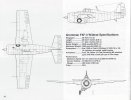
Running changes were made to F4F-3s: self-sealing fuel tanks and armor plating for the cockpit and oil tank. Shoulder straps were added in early 1942. The last -3 was modified by Grumman with hydraulically powered folding wings that reduced parked width from 38 feet to just 14.3 feet as the XF4F-4. At the same time, two more .50s were added in the outer wing panels. The authorization for carrier-based VFs was increased from 18 to 27 aircraft, but the Navy passed on the powered wing folding as various changes kept increasing aircraft weight. The first operational F4F-4s were aboard Enterprise and Hornet for the April 1942 Doolittle raids on Japan.
Even after deletion of the hydraulic wing fold, empty weight increased almost 700 pounds. The increased size of the squadrons was a big plus, but pilots were less than enthusiastic due to performance losses with the -4.
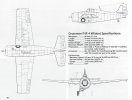
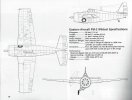
By this time, Grumman was switching over to F6F Hellcat production. The Navy was not ready to relinquish Wildcat production altogether and so Grumman turned over production to Eastern Aircraft of General Motors -- along with production of the TBF torpedo bomber. The Eastern FM-1 was almost identical to the F4F-4 but lacked the outer wing guns, taking the total down to four .50s and giving the FM-1 slightly better performance.
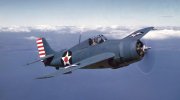
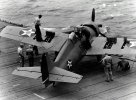
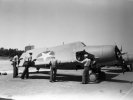
In 1943, the F6F and F4U took over the main effort in Marine and Navy fighter squadrons. But the Navy desired a lighter weight fighter for use aboard escort carriers and tapped Grumman to develop a lighter F4F. The result was the XF4F-8, which featured a lighter and more powerful single-row Wright R-1820 instead of the Pratt & Whitney R-1830 of the previous versions. The -8 also featured a taller fin and rudder and reduced armament of four .50s. It didn't have the performance of the F4U or F6F but could do well at lower altitudes. Eastern turned out well over 4,000 FM-2s in 1943-45.
I should add that the Royal Navy also took delivery of quite a few Wildcats. With the end of hostilities in 1945, Wildcats quickly disappeared from service; there were plenty of Hellcats and Corsairs on hand to take up the slack.
The XF4F-1 had been designed as a biplane and never flew. The Navy placed orders for Brewster F2As instead. Grumman did not give up, and the design was recast as a monoplane XF4F-2 which first flew in 1937. This was felt to have promise and was modified into an XF4F-3 in 1939. Grumman's persistence finally paid off, and the Navy ordered 54 F4F-3s that same year.
Running changes were made to F4F-3s: self-sealing fuel tanks and armor plating for the cockpit and oil tank. Shoulder straps were added in early 1942. The last -3 was modified by Grumman with hydraulically powered folding wings that reduced parked width from 38 feet to just 14.3 feet as the XF4F-4. At the same time, two more .50s were added in the outer wing panels. The authorization for carrier-based VFs was increased from 18 to 27 aircraft, but the Navy passed on the powered wing folding as various changes kept increasing aircraft weight. The first operational F4F-4s were aboard Enterprise and Hornet for the April 1942 Doolittle raids on Japan.
Even after deletion of the hydraulic wing fold, empty weight increased almost 700 pounds. The increased size of the squadrons was a big plus, but pilots were less than enthusiastic due to performance losses with the -4.
By this time, Grumman was switching over to F6F Hellcat production. The Navy was not ready to relinquish Wildcat production altogether and so Grumman turned over production to Eastern Aircraft of General Motors -- along with production of the TBF torpedo bomber. The Eastern FM-1 was almost identical to the F4F-4 but lacked the outer wing guns, taking the total down to four .50s and giving the FM-1 slightly better performance.
In 1943, the F6F and F4U took over the main effort in Marine and Navy fighter squadrons. But the Navy desired a lighter weight fighter for use aboard escort carriers and tapped Grumman to develop a lighter F4F. The result was the XF4F-8, which featured a lighter and more powerful single-row Wright R-1820 instead of the Pratt & Whitney R-1830 of the previous versions. The -8 also featured a taller fin and rudder and reduced armament of four .50s. It didn't have the performance of the F4U or F6F but could do well at lower altitudes. Eastern turned out well over 4,000 FM-2s in 1943-45.
I should add that the Royal Navy also took delivery of quite a few Wildcats. With the end of hostilities in 1945, Wildcats quickly disappeared from service; there were plenty of Hellcats and Corsairs on hand to take up the slack.


