• Please take a moment and update your account profile. If you have an updated account profile with basic information on why you are on Air Warriors it will help other people respond to your posts. How do you update your profile you ask?

    Go here:

    Edit Account Details and Profile

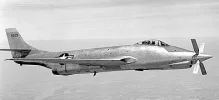
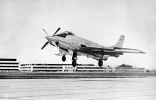
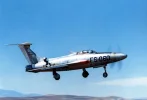
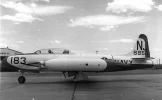
Little known / experimental aircraft

The Douglas A-3 (A3D) also had no ejection seats. Pilots used to joke that A3D stood for "All 3 Dead". The reserves were still using it as a tanker (KA-3) into the late '80's, and the EA-3B was finally retired in1991. Pic is from CAG20 ACDUTRA at NAS Fallon in the late '80's.
1780543541739.webp
 
During the early days of what was then broadly called “electronic warfare” (Vietnam) the Jason Committee came out with a lot of wild ideas. One was the Iroquois Night Fighter and Night Tracker (INFANT) as part of the Igloo White operation to close the Ho Chi Minh Trail that also included USN OP-2E Neptune’s from VO-67. The highly modified UH-1 worked well, using early Starlight night vision systems, but was limited by the fact that Starlight couldn’t see through triple canopy jungle and had radios that couldn’t communicate with special forces on the ground.

IMG_2162.webp
 
During the early days of what was then broadly called “electronic warfare” (Vietnam) the Jason Committee came out with a lot of wild ideas. One was the Iroquois Night Fighter and Night Tracker (INFANT) as part of the Igloo White operation to close the Ho Chi Minh Trail that also included USN OP-2E Neptune’s from VO-67. The highly modified UH-1 worked well, using early Starlight night vision systems, but was limited by the fact that Starlight couldn’t see through triple canopy jungle and had radios that couldn’t communicate with special forces on the ground.

That reminds me that there are so many things we take C2/3/4-wise for granted nowadays that didn't work well, work together or just plain exist back then.
 
I just finished the novel “Eruption” by James Patterson and the late Michael Crichton with a plot that revolves around a major eruption on Hawaii that has some terrifying consequences (as always, a fantastic Crichton book).

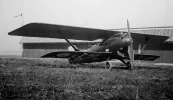
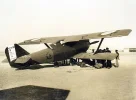
It mentioned that back in the day during a previous volcano eruption, LtCol George Patton was in charge of a bombing campaign to divert the lava flow. The aircraft used were the Keystone B-3 bombers. These were the last biplanes ordered by the Army Air Corps. The bomb load was 2,500 lbs and top speed was 114mph.


1784851559187.webp

1784851585365.webp

1784851788849.webp
 
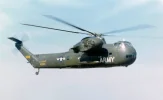
Pratt & Whitney has two 747SP's (only one flying apparently) that they use as an engine testbed as well. They mount them the fuselage in a similar position as Honeywell's 757 and on the wing sometimes as well, from pics usually on the left inboard station.

1785852241144.png

1785852434976.png
 
Happened to see this in Aviation Week and Space Technology. Is NASA trying to simply restore their SR-71 or actually try and make it airworthy? I believe its last flight was in 1999.

 
Happened to see this in Aviation Week and Space Technology. Is NASA trying to simply restore their SR-71 or actually try and make it airworthy? I believe its last flight was in 1999.

The Blackbird (all three versions) were among the coolest aircraft ever, but...it would be a colossal waste of money to try and get them to fly again. They were already extremely expensive to fly and maintain to start with (JP-7 anyone?) and as 27 years have passed since the last flight, well it ain't going to be cheaper. Not only that but the pilots and maintainers are all well past retirement age, if they are still alive, and the spare parts were disposed of in 2007.

I would like to think they're restoring her after sitting outside in the desert sun for almost three decades but I would not put it past current leadership to try and restore her to flight for...reasons? That would be even dumber than trying to restore some F-14's to flight because some folks just can't get over it being put out to pasture. Wait, hold my beer...

1790866779219.webp

Of course I also wouldn't put it past someone who flouts FAA rules about flying privately owner fighter jets over populated areas to be enamored with the idea either.
 
Happened to see this in Aviation Week and Space Technology. Is NASA trying to simply restore their SR-71 or actually try and make it airworthy? I believe its last flight was in 1999.

I have read a couple different aviation periodicals that people (Dryden) are speculating that nasa is trying to bring it back as sort of a mach 3+ chase plane.

Doesn't make much sense to me since they already have a slick eagle that can do 2.5.
 
I have read a couple different aviation periodicals that people (Dryden) are speculating that nasa is trying to bring it back as sort of a mach 3+ chase plane.

Doesn't make much sense to me since they already have a slick eagle that can do 2.5.
It is certainly a baffling question, and a guess would be that perhaps it is a capability that the Blackbird has that no other airplane has? There are 2 capabilities that come to mind: 1 is sustained Mach 3+ flight and 2 is the ability to launch a large object at those speeds. (The photos below are of the 5 ton D-21 drone, 1 of which led to a SR-71 crash).

Again, it is certainly odd.


1790934737625.webp

1790934879805.webp

 
It is certainly a baffling question, and a guess would be that perhaps it is a capability that the Blackbird has that no other airplane has? There are 2 capabilities that come to mind: 1 is sustained Mach 3+ flight and 2 is the ability to launch a large object at those speeds. (The photos below are of the 5 ton D-21 drone, 1 of which led to a SR-71 crash).

Again, it is certainly odd.


View attachment 46309

View attachment 46310


*Sigh* Now I gotta put on my airplane nerd hat...

The Blackbird (all three versions) were among the coolest aircraft ever...

There were three versions of the Blackbird', with several sub-types. The SR-71 was was just of the three, obviously the most well known and longest lived one, but she wasn't the first. There was also the YF-12, a fighter version of which three were made that was eventually cancelled by McNamara in 1968.

Here's the YF-12 with an AIM-47, a predecessor of the AIM-54 Phoenix. You can tell it is a YF-12 because the 'chins' don't extend to the tip of the nose like they do for the SR-71.

1790950746935.webp

The third version of the Blackbird, and the original one, is the A-12 'Oxcart'. She was a single-seat CIA aircraft that was a little shorter and a little faster than the SR-71, and since she never was a military bird (even though some were painted up as USAF birds) she kept her Lockheed designation of A-12. She only flew operationally for a year before being retired in 1968.

It was a version of the A-12, the two-seat M-21 (M was for 'Mother') with a Launch Control Officer in the back seat, that was the launch aircraft for the D-21 drone and not the SR-71. There were only 4 launches of the D-21 from the M-21 and on the last one the D-21 engine had an 'unstart' (also an issue with the SR-71 engines) and struck the tail of the M-21 launch aircraft, causing both aircraft to crash and resulted in the death of the Launch Control Officer who drowned after ejecting.

After that the D-21's were launched from B-52's with a big ass booster to get her up to speed. The D-21 flew only 4 operational missions over China and all apparently ended in failure.

1790954030694.webp

So in fact the only thing the SR-71 may be unique in doing is sustained flight at ~Mach 3, she was never used as a launch aircraft for other aircraft (though did carry payloads on her back during NASA testing) and the modifications and certifications in order to get that done would be cost prohibitive.

That is a big may with sustained Mach 3 flight anyways, it is the only one we know of right now.

1790954675494.webp

There have also been plenty of systems tested that exceed that speed even recently, though all but one of them were unmanned. Frankly I don't know how much more useful a manned aircraft would have when doing that testing right now.

1790955368686.webp
 
Back
Top