

-
Please take a moment and update your account profile. If you have an updated account profile with basic information on why you are on Air Warriors it will help other people respond to your posts. How do you update your profile you ask?
Go here:
Edit Account Details and Profile
You are using an out of date browser. It may not display this or other websites correctly.
You should upgrade or use an alternative browser.
You should upgrade or use an alternative browser.
Little known / experimental aircraft
- Thread starter Randy Daytona
- Start date
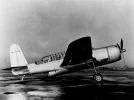
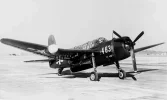
Aircraft-dropped antiship torpedoes were deemed to have great potential in the early days of naval aviation, but with the end of World War II came the end of torpedo attacks against surface ships. The 1930s Douglas TBD Devastator -- the first USN monoplane torpedo bomber -- faced disaster in the early 1942 battles, but Grumman and Vought both flew prototype torpedo bombers in late 1941. Grumman's design -- the TBF Avenger -- became one of the mainstays of carrier aviation through the war and into the 1950s, albeit in carrier-based ASW, AEW or COD form. Grumman turned production of the Avenger over to GM's Eastern Aircraft (as the TBM) to concentrate on fighter production.
Vought's XTBU-1 Sea Wolf had superior power from a Pratt & Whitney R-2800 which gave it better performance than the TBF. Like Grumman, Vought turned over production in order to concentrate on F4U Corsair fighter production. A 50 mph speed advantage over the TBF prompted the Navy to place an order for 1,000 aircraft in 1942. Production was turned over to Consolidated-Vultee at a converted Mack truck factory in Allentown, Pennsylvania as the TBY.
In contrast to the TBF, the TBY suffered delay after delay, and it was August of 1944 before the first TBY-2 flew. Production of 180 TBY-2s continued into 1945 before the Sea Wolf was cancelled due to the pending end of hostilities. Most production aircraft went to NAS Quonset Point RI and the only TorpRon to be assigned TBY-2s was VT-154, which was redesignated VT-155 in August 1945. When the war ended, the TBYs were withdrawn from squadron use. Shortly thereafter they were scrapped.
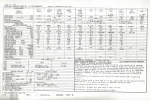
Vought's XTBU-1 Sea Wolf had superior power from a Pratt & Whitney R-2800 which gave it better performance than the TBF. Like Grumman, Vought turned over production in order to concentrate on F4U Corsair fighter production. A 50 mph speed advantage over the TBF prompted the Navy to place an order for 1,000 aircraft in 1942. Production was turned over to Consolidated-Vultee at a converted Mack truck factory in Allentown, Pennsylvania as the TBY.
In contrast to the TBF, the TBY suffered delay after delay, and it was August of 1944 before the first TBY-2 flew. Production of 180 TBY-2s continued into 1945 before the Sea Wolf was cancelled due to the pending end of hostilities. Most production aircraft went to NAS Quonset Point RI and the only TorpRon to be assigned TBY-2s was VT-154, which was redesignated VT-155 in August 1945. When the war ended, the TBYs were withdrawn from squadron use. Shortly thereafter they were scrapped.
Last edited:


Was the old Mark 46 torpedo on the H2 and H-60 Bravo not ever intended for use against surface combatants? What about on today's Romeo? Do they train to an anti-surface capability with with torpedoes?
The MK 46 and MK 46 SW were pretty much ASW only. The MK 50 introduced a host of new capabilities ranging from changes to the warhead to search logic. There were also additional attack configurations available in the software that could be programmed on the fly. The MK 54 inherited much of the software capability from the MK 50, albeit with considerable growing pains initially, while retaining the MK 46 physical design.

Was the old Mark 46 torpedo on the H2 and H-60 Bravo not ever intended for use against surface combatants? What about on today's Romeo? Do they train to an anti-surface capability with with torpedoes?
I remember that being a plot point in Tom Clancy's Debt of Honor, with the Japanese using ship-launched ASW torpedoes to hit US carriers, always wondered about the feasibility of that.

If the MK 46 was ever to be used for surface attack the War Hoover would have been the likely vehicle. I never heard a thing about that capability in the MK 46, and it certainly wasn't a tactic VS crews trained for. In the S3B there were better options for surface vessels.

Air dropped torps had a rather low hit rate in WWII and that was followed by the rapid rise of anti-ship missiles, so you don’t hear of their use in ASuW much anymore although I guess it could be done. I imagine getting within range would be a sporty piece of work.Was the old Mark 46 torpedo on the H2 and H-60 Bravo not ever intended for use against surface combatants? What about on today's Romeo? Do they train to an anti-surface capability with with torpedoes?
I remember that being a plot point in Tom Clancy's Debt of Honor, with the Japanese using ship-launched ASW torpedoes to hit US carriers, always wondered about the feasibility of that.
I never made it that far in the book series, but as good as Clancy was on a lot of things, he swung and missed on a lot of other things. He never could decide if the helicopter in Red Storm Rising was a Bravo or a Foxtrot (I believe he called it a Foxtrot).
That said, could a MK-50 hit a carrier? Yes. Was it designed to do so? No.

Happened to see this concept fighter -
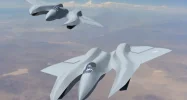
A digital rendering depicting two SM-39 Razor aircraft, a conceptual sixth-gen fighter proposed by Stavatti Aerospace for the US Navy’s NCAD program. Image: Stavatti Aerospace
and thought it had a striking resemblance to the Cylon Raider from BSG. No word on Basestars…

 nextgendefense.com
A digital rendering depicting two SM-39 Razor aircraft, a conceptual sixth-gen fighter proposed by Stavatti Aerospace for the US Navy’s NCAD program. Image: Stavatti Aerospace
and thought it had a striking resemblance to the Cylon Raider from BSG. No word on Basestars…
A New Challenger Emerges in the F/A-XX Race With Mach 4 Fighter Concept
SM-39 Razor is a Mach‑4-class fighter concept that features a triple-fuselage design, single-seat, tandem two-seat, autonomous variants, modular cockpit, and internal weapons bays.
nextgendefense.com
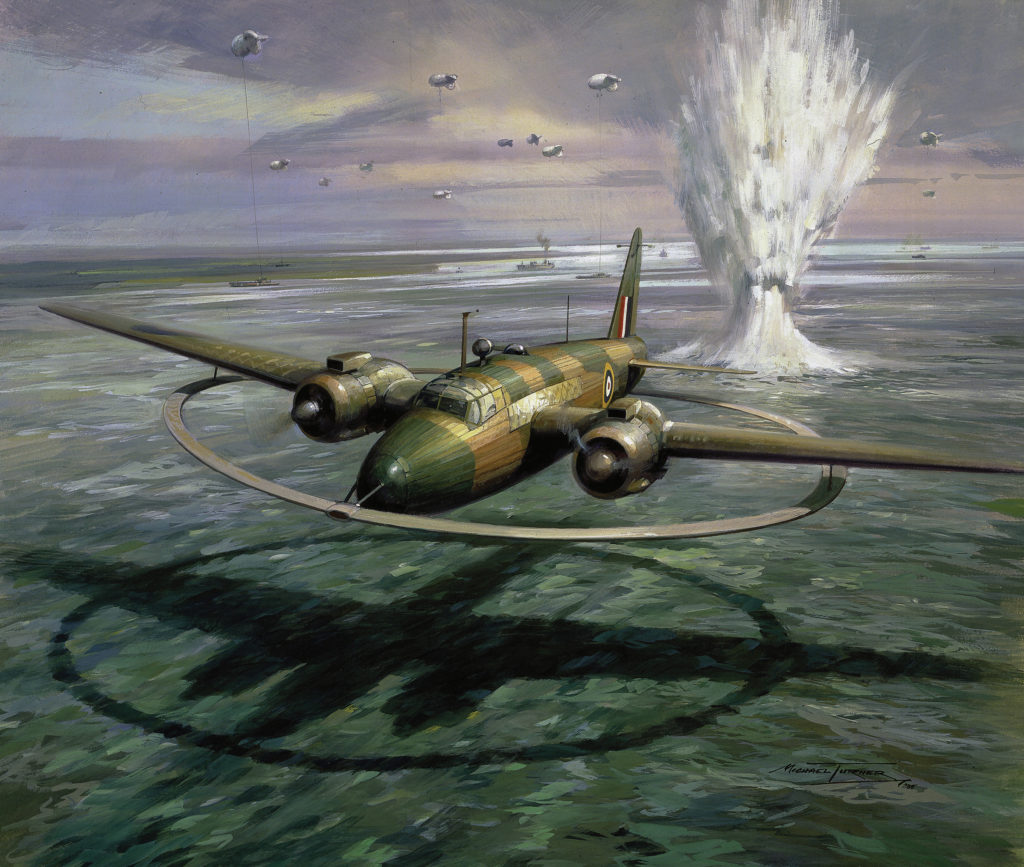
The Type 418 Wellington Bomber converted to DWI (Detonation Without Impact) had a magnetic ring around the airplane and a dedicated engine to generate a strong magnetic field to detonate mines. The crews had to fly at less than 130mph and between 35 ft and 60 ft over the water. Detonations would severely jolt the aircraft, in one case recording 10g’s on the airframes accelerometers.
 historynet.com
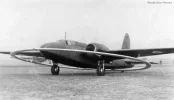
Aerial Minesweeping: Ingenious Solution to a Hidden Undersea Menace
When Germany deployed magnetic mines early in the war, Britain countered with aircraft that could explode them by mimicking a ship’s magnetic signature.
historynet.com
Sounds like a job for the Zombie Viking!The Type 418 Wellington Bomber converted to DWI (Detonation Without Impact) had a magnetic ring around the airplane and a dedicated engine to generate a strong magnetic field to detonate mines. The crews had to fly at less than 130mph and between 35 ft and 60 ft over the water. Detonations would severely jolt the aircraft, in one case recording 10g’s on the airframes accelerometers.
Aerial Minesweeping: Ingenious Solution to a Hidden Undersea Menace
When Germany deployed magnetic mines early in the war, Britain countered with aircraft that could explode them by mimicking a ship’s magnetic signature.
View attachment 44829
Sounds like a job for the Zombie Viking!
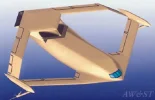
You joke but this was a Lockheed Martin proposal for the Common Support Aircraft, which was to replace the Viking along with C/E-2's.
An update on the B-52J engine upgrade. Will be interesting to see how much extra range the Boeings get with modern engines:

 www.flightglobal.com
B-52 re-engine initative passes critical design review - FlightGlobal
The Rolls-Royce F130 low-bypass turbofan is set to replace the eight Pratt & Whitney TF33 engines currently installed on B-52 heavy bombers. The US Air Force (USAF) effort to re-engine the Boeing B-52H heavy bomber has passed a key technical milestone. The air force confirmed on 4 May that the...